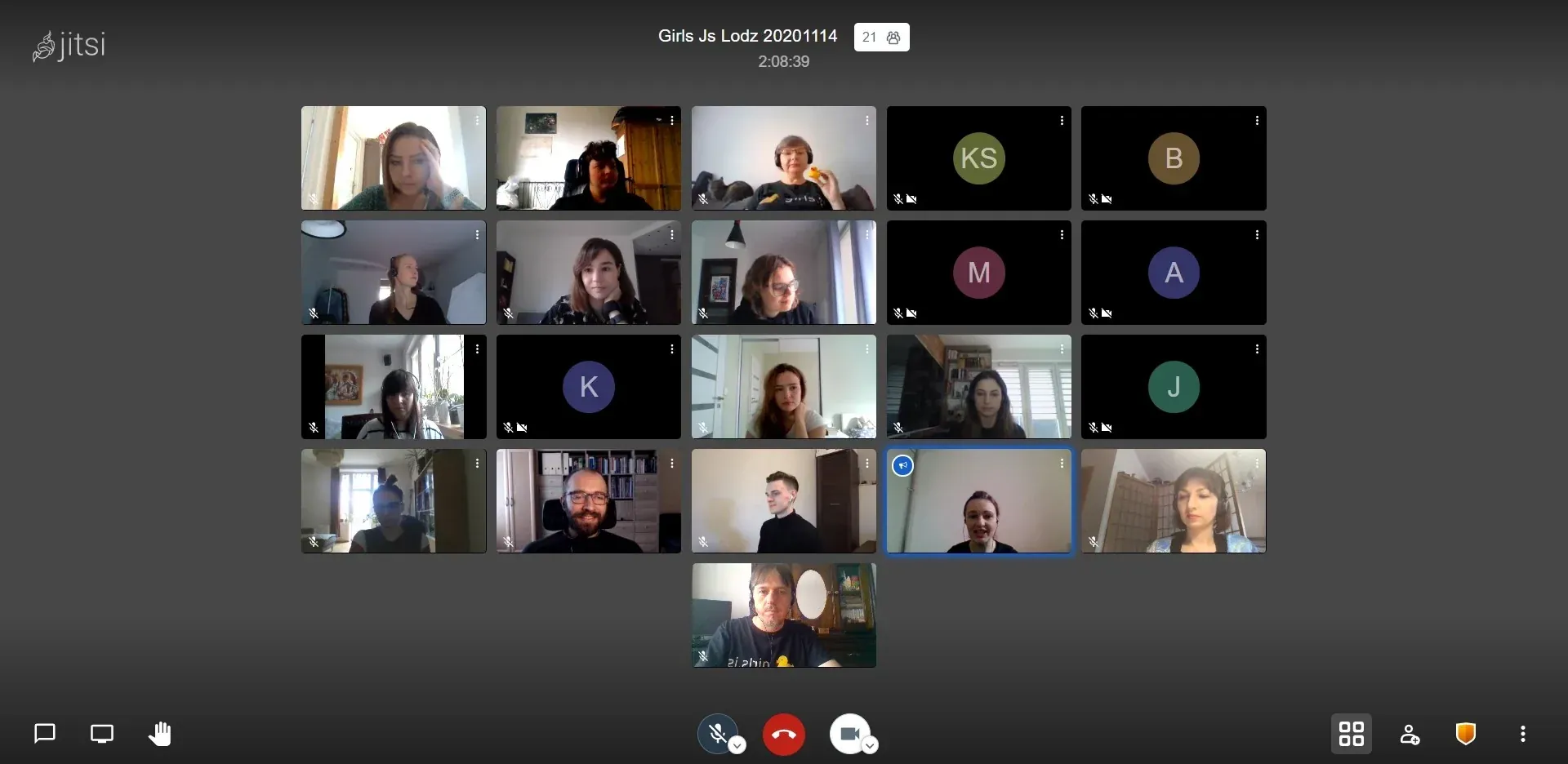
On 14 November 2020 I was a mentor at the first online edition of Girls.js. COVID-19 moved everything online; I wanted to see if we could support participants the same way. Energy and willingness to learn were real despite the screen.
Before the workshops I thought about how to provide support without “looking over someone’s shoulder”. The organisers took care of logistics and tech, so we could focus on learning. The materials were clear and matched the level; each task built on the previous one. As a mentor I could focus on explaining nuances and solving concrete problems.
CodeSandbox with the Live option turned out to be a game changer. I had real-time access to all participants’ code, could switch between environments quickly, catch bugs before they caused frustration and show live how I debug. Instead of “do it like this” – the whole thought process. For beginners that’s a big difference.
I was worried whether we’d manage a warm atmosphere online. Doubts disappeared in the first minutes. Participants asked questions and experimented with code. The moment when someone goes from “I think it’s broken” to “oh, it works!” reminds me why I care about sharing knowledge. Those small wins – first bug fixed, understanding a loop, styling an element – build a real interest in programming.
The online format, forced by the pandemic, opened the door for people who couldn’t have made it to in-person workshops. Online mentoring needs a different rhythm though: check more often if everyone’s following, encourage questions. In a virtual space it’s easy to get lost, so we had to be more attentive as mentors.
Girls.js teaches concrete skills, but just as important is building confidence that programming is for everyone. For me mentoring is a way to give back part of what I’ve learned. Thanks to the organisers and participants. If you’re thinking about learning to code – follow Girls.js and come to a workshop, in-person or online.